Keep healthcare AI workloads under your boundary
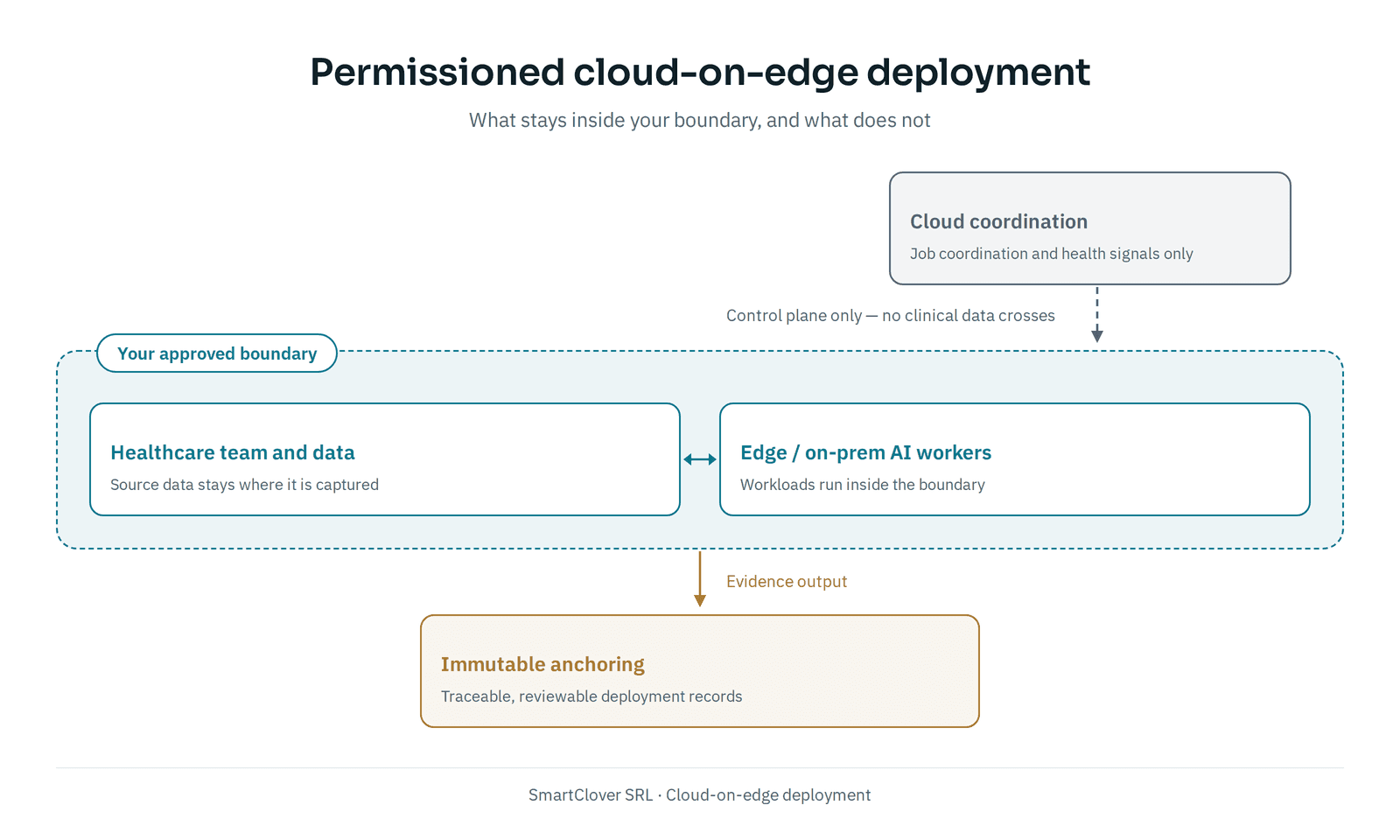
SmartClover uses provider-neutral permissioned cloud-on-edge deployment patterns so healthcare and research teams can keep sensitive workloads within approved boundaries while cloud coordination supports release control, observability, and traceable deployment records.
Clinical data stays within your boundary
Deployments run on "your AI, your Data" boundaries that you designate, so AI product platforms can operate on approved on-prem and on-edge infrastructure with cloud coordination layers matched to residency, privacy, and procurement requirements. The goal is to keep the location where source clinical data is captured and processed explicit.
Audit evidence from deployment traces
Deployment events can be written to append-only records with immutable anchoring, producing timestamps and build fingerprints for security review, audit preparation, and release investigation. Teams can review what was released, when it changed, and which approval context applied.
Policy automation with human oversight
Policy templates are built into product releases so participation rules remain aligned with sponsor requirements, local governance, and security constraints. Teams operate under defined rules without surrendering control to a central data silo.